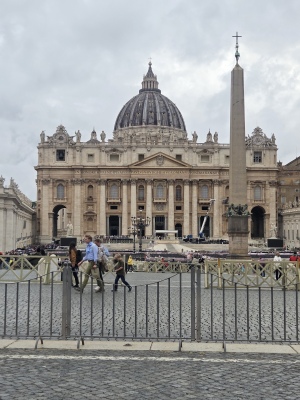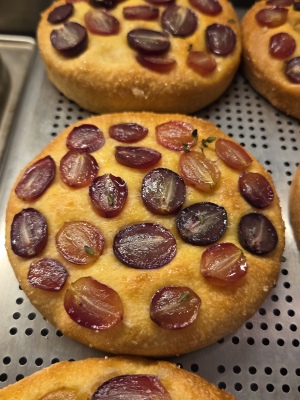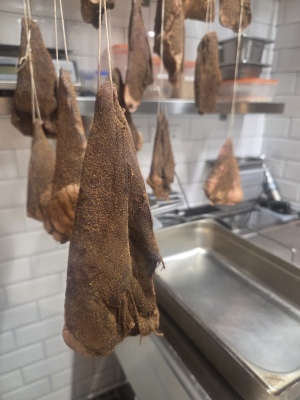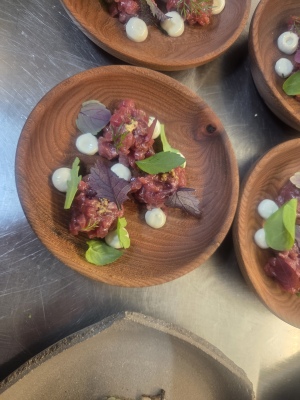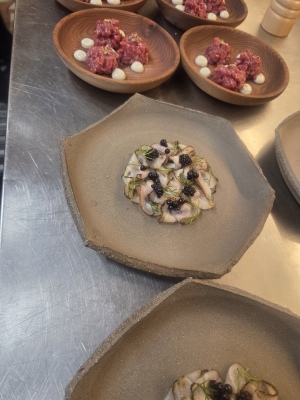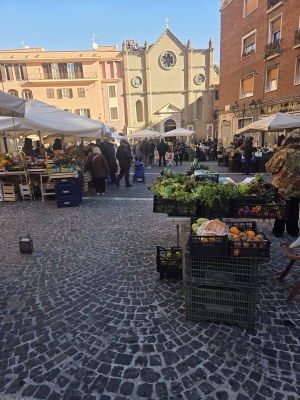


In the Italian city of Tivoli, there is a restaurant named Al Madrigale that is unlike any other that I have seen and had the pleasure to work at. That name will ring on in Tivoli’s culinary scene for decades to come. There are few things that define human experience like food, culture and locale, and Al Madrigale is a place that blends history, location, culture, and food into one cohesive atmosphere that makes all troubles melt away. It is a place of amazing talent and people. I have always heard that Italians are among the most friendly people in the world, but the people at this restaurant take it to another level. They took me under their collective wings and taught me about Roman cooking. This experience showed me that what we call “Italian cuisine” is often different from what we think of in America. I will not be able to look at anything the same way again in relation to what I have learned at Al Madrigale.
I chose to stage at Al Madrigale because of their philosophy of “transhumance.” What does that mean to me and the overall scope of a restaurant? It means that there is an ever changing and flowing set of ideas that I will be using to grow and change how I look at food going forward. I thought I knew the basics, but I realized how little I knew, and that I needed to learn more. I discovered so many new and different ingredients during my time there, and I cannot wait to come up with different ideas and create new recipes. I am excited to bring back this knowledge, and use it in my own Creole Italian style and make something truly memorable for the people that I work with back in New Orleans. For example, I have always seen and heard of different fermented food items like koji, but I did not know how to actually use it to make a product like they do at Al Madrigale. They use koji to make a rye bread version of soy sauce and it is absolutely incredible how they use two fermented products to make one amazing, savory, deep-tasting product. They let the koji inoculate on the rye bread for two days at 90 degrees Celsius. They then soak the koji-laced bread in water and salt for another two days, which is then simmered until it’s reduced by approximately ⅓ of the liquid or until it has gained some slight thickness and increased in savoriness and salinity.
Italian kitchens are very different from those I experienced in America. One difference is that in America, stations are based on cooking technique and the courses are spread throughout Italy, the kitchen set up is based on courses: antipasta, primi, secondi, dolce (“appetizer,” first, second, dessert). This setup was nice because every cook has to have some knowledge of various methods utilized for cooking each course — promoting better learning and advancement of skills.
What I love about Italians in general is their passion for cooking. At Al Madrigale, when asked about why they became a chef, each person took the time to explain how they got to this point in their careers. One of the funniest stories that highlights the passion of Italians and their food is, when helping to prepare a Parmiggiano, I made the mistake of saying that I was mainly familiar with “chicken parmesan”. Thankfully, there were only four people in the kitchen area at the time because all of them acted as if I had insulted their nonna (grandma). The head chef said that I am definitely American as there is no such thing as “chicken parmesan” in Italy, only the eggplant parmesan. Two days later, during a staff meal, I tasted the Parmiggiano and with six sets of eyes on me, was asked, “which one do you like better?”. There was only one answer: the original version from Nonna Bianchi (Executive Chef Gian Marco Bianchi’s grandmother).
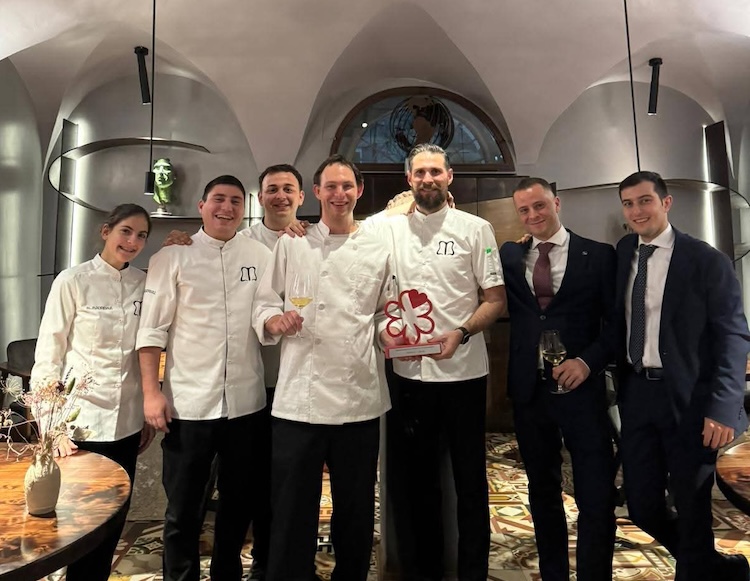
While there are many things that can be learned from a stage, there are a few unique lessons that can only come from staging at a newly minted Michelin star restaurant (which Al Madrigale earned this year). New ingredients and methods of preparation are a few of the lessons that I learned in a kitchen that performs at the level that Al Madrigale does. There is also a lot to learn when you do not know the local language and dialect, and are also in an unfamiliar kitchen. Patience in the kitchen is a huge virtue, and breathing, accuracy and precision of movements are also required. Patience goes a long way, especially when you are thousands of miles from home and have to get used to starting at the bottom again. Breathing helps to ensure that you stay calm and cool under pressure and are able to think clearly when things get stressful from a slow prep day to a full dining room lunch. Accuracy and precision of movements is what the higher level restaurants like Al Madrigale require. Everything must be done a certain way such that each plate comes out looking and tasting exactly like the last. Everything revolves around consistency of product, from the size of the cut to the final temperature and final look of the plate, demanding precision and accuracy.
During my time at Al Madrigale, I witnessed an incredible part of their history, their first Michelin star and the Best Opening Italy 2026, after only being open eight months. I was fortunate to witness the excitement of all who work at the restaurant. If I could go back and do it all over again, there is one thing that I wish I would have done: I wish I would have taken the time to try to learn more Italian before arriving and jumping in straight away. I think it would have made things a bit easier for me. But overall, without a doubt, my stage experience propelled me to the next level, and I am ready for the next challenge that awaits me.