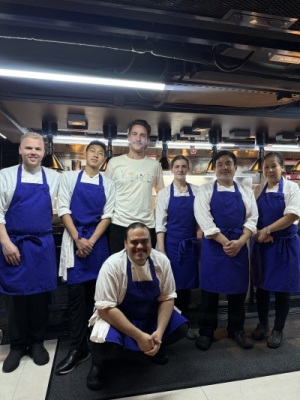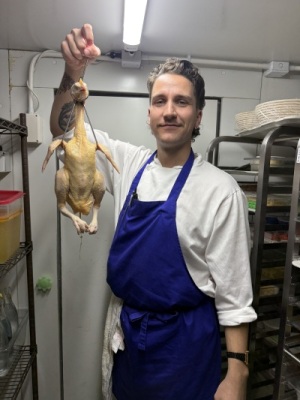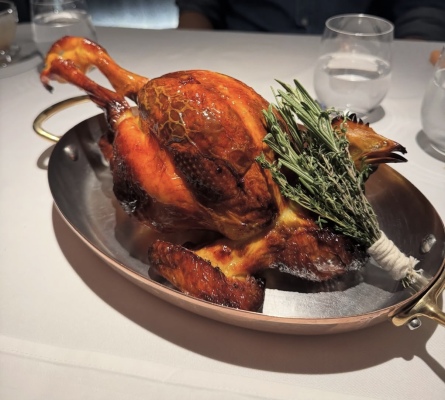


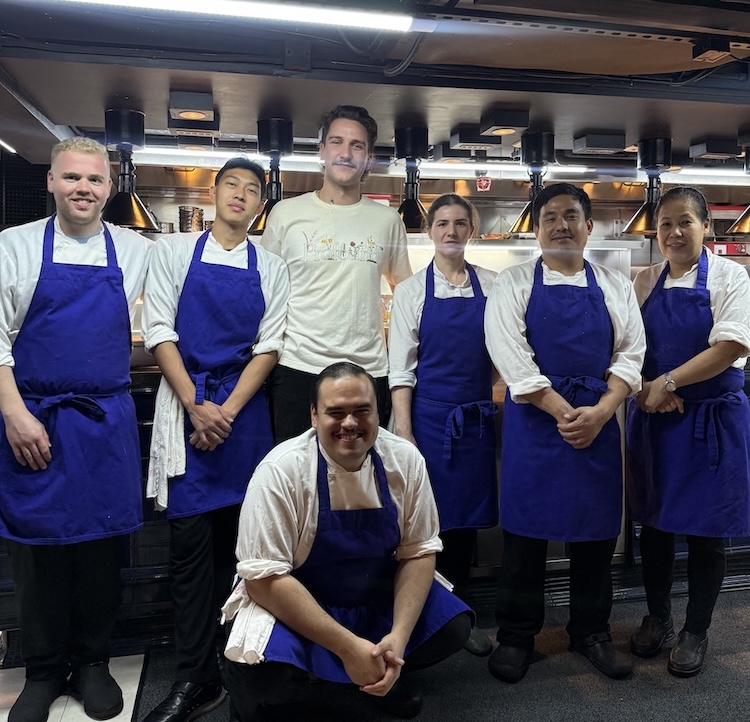
I chose Belon retaurant in Hong Kong for several reasons. First, I have long admired Head Chef Matthew Kirkley. The respect he commands among peers and his meticulous, perfectionist approach to cuisine made it an easy decision when Chef Erik Anderson suggested I pursue my stage there. I was also eager to immerse myself in a kitchen that emphasized technique at a deeper level than I had experienced. In Californian fine dining—of which I am proud to be a part—the products are extraordinary, some of the finest in the world. Working with such immaculate produce, seafood, and ingredients is a privilege that makes the craft just a little easier. Belon, while also sourcing excellent products, impressed me with the way it elevates humble ingredients into something truly special. Hong Kong, was an exciting unknown. I arrived with no expectations, and the experience proved to be nothing short of incredible. In the end, Belon and Hong Kong offered exactly what I was looking for: a place to refine my skills, broaden my understanding of cuisine, and push myself beyond the familiar.
I spent the majority of my time at Belon working in the Garde Manger section, an area where the restaurant truly shines. Chef Kirkley and Chef Mina Güçlüer, the chef de cuisine, are both meticulous and detail-oriented, and their approach gave me a crash course in Belon’s culinary philosophy while providing countless opportunities to refine my skills. I worked alongside one other chef de partie, beginning our day at 11 a.m. with a focused and disciplined afternoon of preparation. Unlike many kitchens in the U.S., Hong Kong restaurants often do not have an AM prep or commis team, so we were responsible for all of our mise en place. This was another aspect I appreciated, as it allowed me to get hands-on experience with nearly every element of the menu. While most of my time was concentrated in Garde Manger, I also had the chance to contribute to other sections of the kitchen. During service especially, Belon’s structure encourages cooks to engage in a variety of ways, and in addition to working a handful of shifts on other stations, I made a point to observe closely and ask questions about the preparations and techniques happening throughout the kitchen. These experiences not only sharpened my technical skills but also deepened my understanding of how a cohesive, disciplined team brings a menu to life.
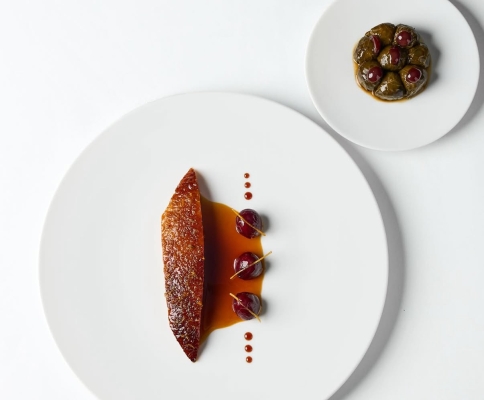
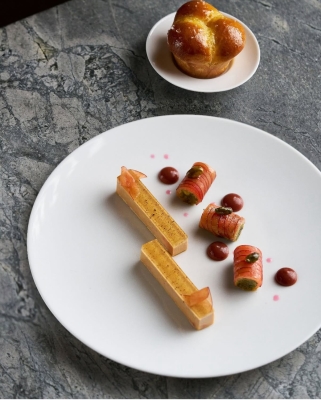
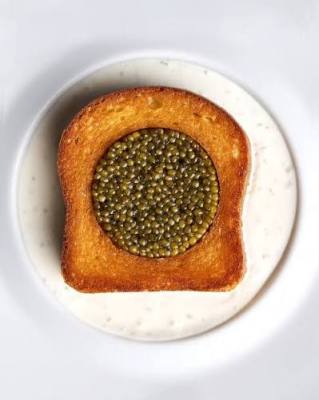
In Garde Manger, I gained a deeper appreciation for precision and restraint. The style at Belon is simultaneously complex and intricate, yet the final product appears effortlessly simple. The chefs employ a wide range of creative plating techniques and artistic approaches that I was able to observe and practice firsthand. For example, one dish that stood out to me was a stunning foie gras terrine capped with ice wine gelée. Alongside it, a mixture of crushed candied pistachios, pistachio paste, and crème fraîche was wrapped in thinly sliced plums and rolled into a cylindrical shape. When sliced and unwrapped, the result was deceptively simple, yet elevated to a level of beauty that left a lasting impression on me. Another preparation I loved working on was a citrus pith bavarois. I admired the idea of using the entire fruit, especially since citrus piths are often overlooked or dismissed. Chef Mina found a way to make them shine: we blanched the peeled and cleaned piths seven times to remove bitterness, then cooked them in syrup, compressed them with citrus juice, and finally blended them into a smooth base. Combined with whipped cream and set with the perfect ratio of gelatin, the bavarois was capped with a vanilla citrus gelée, punched into rounds, and topped with caviar at service. It was a beautiful example of the saying that a duck looks calm above water while its legs work furiously beneath the surface. Many of Belon’s dishes shared this quality—appearing clean and simple on the plate, yet requiring immense thought, effort, and precision behind the scenes. Experiencing this balance firsthand reshaped the way I think about ingredients and presentation, teaching me that true elegance in cuisine often comes from discipline and restraint rather than complexity alone.
Outside of the kitchen, Hong Kong itself was an incredible part of the experience. Having arrived with little prior knowledge of the city, I was struck by its energy, diversity, and constant movement. The blend of cultures—Chinese traditions alongside international influences—was reflected not only in the food but in daily life. Exploring local markets gave me a new appreciation for ingredients I had rarely encountered before, from live seafood to dried goods and spices unique to the region. It was a unique experience and I got to meet and interact with all types of people from across the world.
This stage at Belon was an invaluable experience that strengthened both my technical skills and my perspective as a chef. I am deeply grateful to Ment’or for making this opportunity possible, and I carry forward not only the techniques I learned but also the lessons in discipline, creativity, and leadership. Ment’or’s support has given me tools and inspiration that will continue to shape my career, and I look forward to building on this foundation in the years ahead.