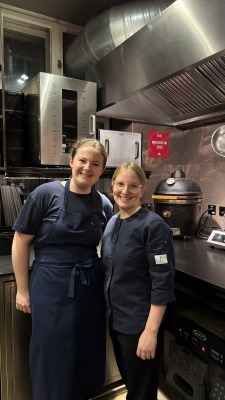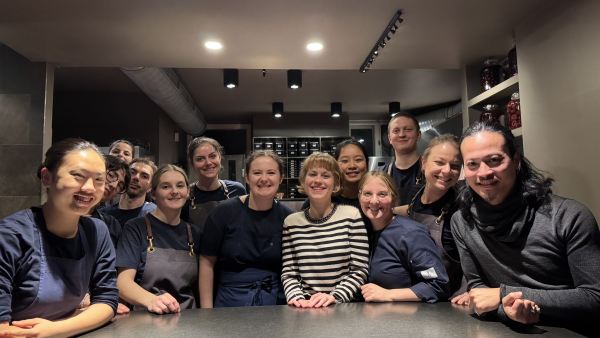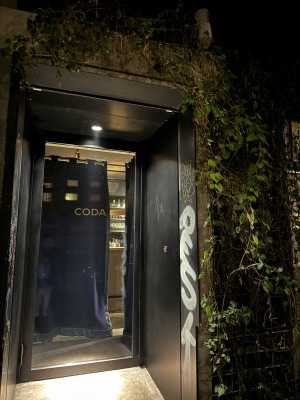


I completed my Ment’or grant stage at Coda in Berlin, a truly unique restaurant owned and operated by Chef René Frank, who strives for innovation within the discipline of pastry. I wanted to learn directly from an innovative chef that places dessert in the limelight. My stage goal was to be immersed in a restaurant that prioritized pastry in ways I have never experienced, and to learn how to create consumer demand for a more niche food offering.
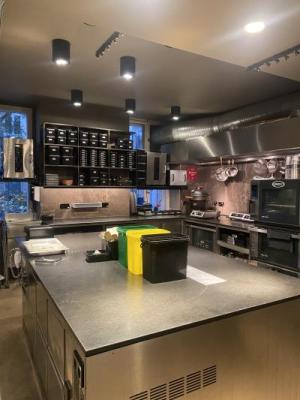
Coda is a relatively small restaurant executing a 14-course menu for a maximum of 30 covers. The dishes on the menu remain within the pastry discipline but have flavors that are more akin to cooking. The work is divided between 3 sections: cold, hot and large prep. The hot section is responsible for all elements that are served hot, while all remaining courses are evenly divided between hot and cold for better flow of service. Large prep handles the tasks that are more time consuming, such as fermenting and preserving.
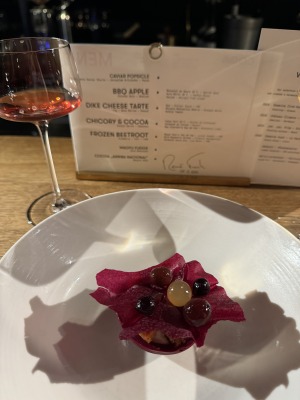
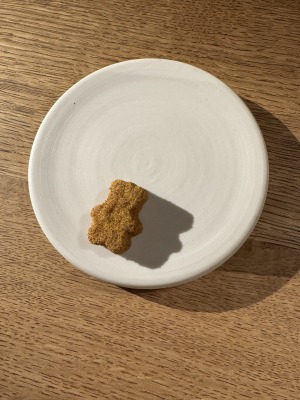
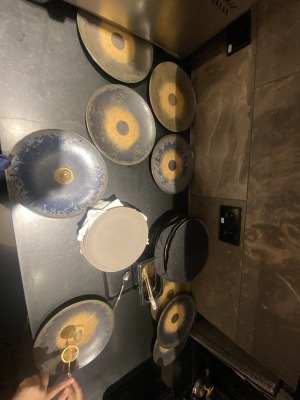
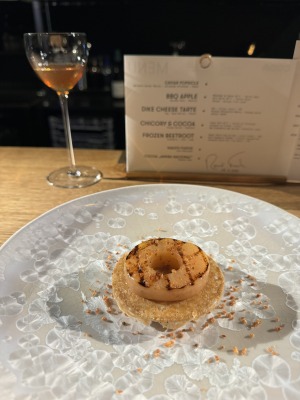
When I arrived for my stage, I was immediately thrown into the thick of things along with the staff and other stagiaire. My time was split into 4 weeks on the cold section, 3 on the hot section and 1 on larger prep projects. While on the cold section, I made a lot of the sauces and prepped for a few of the small one-bite courses. During service I was responsible for sending the first course of a beet gummy bear and the final course of beef fudge. When I transitioned to the hot section, they entrusted me with more and allowed me to work more independently. During daily prep, I made all of the foams for the entire menu on top of daily setup. During service on the hot section, I baked the beef cake course and plated 4 other courses. By this point, I was able to help plate all of the courses at Coda; it was really rewarding to be a part of every single dish and see the full flow of service.
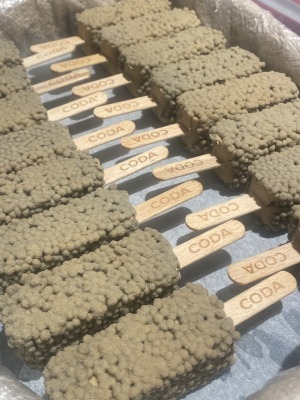
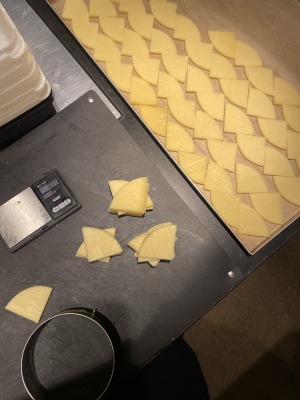
My last week was my favorite as it was spent on prep. It was here that I got to learn more about the ethos behind Coda and gain a deeper understanding of how things were made. I mostly worked on small projects or assisted a staff member, but also got to help on more technical tasks. Some highlights were making a sugar-free chickpea meringue, shaping the ice creams, and conching chocolate.
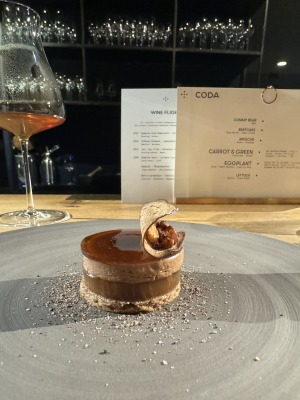
As Coda is like no other restaurant that I have worked at, I accomplished my goal of getting outside my comfort zone. I soon came to realize that the work I was doing at Coda was the closest I could get to savory cooking while still remaining in the realm of pastry, as the lines between these commonly considered to be separate disciplines are blurred at Coda. The most striking thing that I learned was the philosophy behind the restaurant. Chef Rene Frank explained that although Coda is a pastry-centered restaurant, the results push the envelope and cannot be singularly defined. This was truly inspiring to me because thinking about pastry like cooking is what takes Coda to the next level and promotes continuous innovation. One example of this concept is that in their chocolate mousse, instead of following the conventional path of adding white sugar for sweetness, they use a purple carrot reduction made from scraps. This thinking is present throughout the work at Coda as they constantly take steps to get the best flavor out of every single ingredient. For example, they make all chocolate and milk-powder in-house, among other things, crack whole walnuts themselves, and grind their own almond flour. This ideology impacted my view of pastry, and challenged me to think more outside of the box to maximize flavor and freshness.
Likewise, Coda always focused on what would make an ingredient shine. This showed me how creativity can really flourish when the chef is willing to put in extra effort that may seem impractical. In contrast to some other places where I worked in the past that emphasized streamlining, Coda did not allow themselves to be restrained with these concerns. It taught me that it is okay to put extraordinary effort into seemingly simple ingredients with the motivation of composing a dish that is a work of art. One particular aspect that really impressed me was how Coda makes all of their chocolate in house. Although it requires an immense amount of work from the staff, this allows them to have the most control on the outcome and flavor of their product. I previously would not have thought something like this was feasible for a busy restaurant, but the effort pays off in producing complex chocolates that are unique to Coda. Moving forward, I will carry this with me as a reminder to not restrict myself on how a dish is conceptualized and to constantly question how things are done.
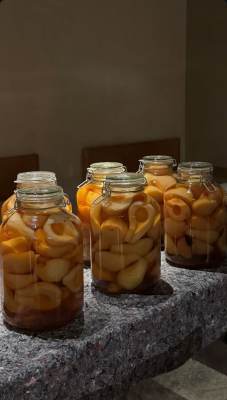
Furthermore, Coda taught me about some of the business logistics of growing a niche luxury business. When it first opened, Coda was a dessert bar selling 5 euro desserts and drinks. Within 10 years, it transformed into a 2-star Michelin non-conformist fine dining restaurant. Chef Rene shared that this was an organic evolution of the restaurant that stemmed from continually listening to guest feedback. For instance, when the 6 or 8 course tasting menu was offered, more guests opted for the 8 course, which signaled that customers desired a more elaborate dining experience. This is how the restaurant has been able to thrive to this day, by constantly questioning their practices and improving to best suit their customers. Along with this, additional service elements were added to the dining experience to increase the value given to the guest. One objective is to educate the consumer on the more elaborate practices at Coda, thus guests are invited into the kitchen for a chocolate tour and presented with unique preparations such as a jar of preserved tomatoes. Along with very intentional verbiage used by the front of house, this really illustrated the importance of striving to perfect all areas of business in accordance with guest feedback. In my future endeavors, I will use this experience to remind myself to be inquisitive on how to improve the business to ensure its longevity, especially when certain aspects are not working.
Above all, this Grant opportunity has given me confidence to take the next steps in my career. This was my first time working in a Michelin kitchen and it was rewarding to be trusted within such a high pressure environment. All of this took me outside my comfort zone and demystified working in this caliber of kitchen. While pushing myself to improve, I saw how big risks can pay off. With this new perspective in my skillset, I will continue to strive for excellence and push myself to constantly be improving. The Ment’or grant experience has transformed my career trajectory and I am beyond grateful that I was given this opportunity.