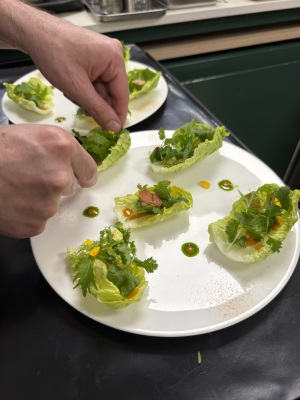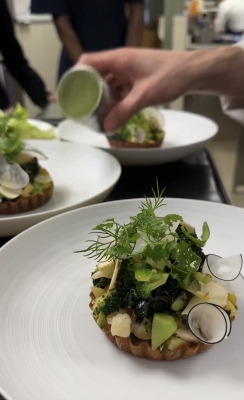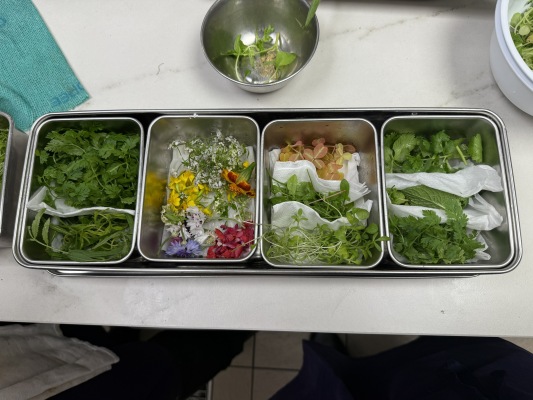


Day one of my stage at Astrance in Paris: The various emulsions and sauces for the canapes were set for service, so we embarked on one of the final tasks of the prep day – picking herbs. First day jitters implies first day focus, and I intended to finish this task in ten, fifteen minutes max. I was eager to show that I wasn’t going to be dead weight in this kitchen. Without thinking, I unzipped the top of what was essentially a two by three foot lunch cooler, to reveal, to my astonishment, a panoply of coriander, dill, basils, chives, chervil springing as if wild from their own little water pots. “They’re alive…” I muttered as I marvelled at the different hues of oxalis, mizuna, shisos, and flowers in the hulking insulated bag. Charles, the intern training me, explained that this was nothing compared to what the contents of this box would look like come Spring. Snapping out of this unexpected, herb-scented reverie, I told myself to hustle and got to picking the herbs for the afternoon’s lunch service. Silently, Charles gestured for me to settle down and still my hands saying, “this is how we take care of herbs here.” Methodically, he laid out 10 different plastic bowls and filled each with cold water and turned each herb stem, deliberately picking leaves at a specific point. He explained how Chef Pascal sought to keep things “alive” on the plate and that he picked the final herbs to size on the pass moments before the food would walk. Each of the herbs was portioned, shocked, and tucked away with a damp paper canopy suspended over it with a clamped plastic lid so as to provide humidity while preventing them from wilting through excess moisture. It was at this point that I realized this wasn’t just another fine dining restaurant. Tasks that I typically dispatched as items on a list were approached with a consideration that I wasn’t aware enough to employ when preparing for over a hundred covers a service at other restaurants I’ve worked. In contrast, this first afternoon at Astrance we had twenty-eight on the books consisting mostly of regulars and VIPS—close to the restaurant’s capacity. As such, the attention to detail had been raised, but it would take me several more weeks to comprehend to what extent. One thing was clear, I had come to the right place to raise my level.
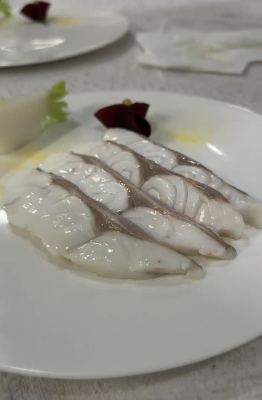
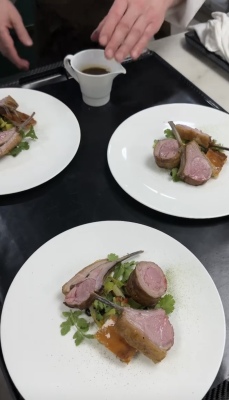
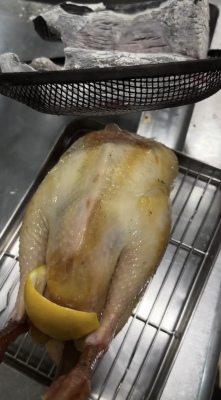
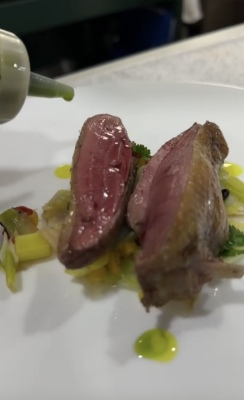
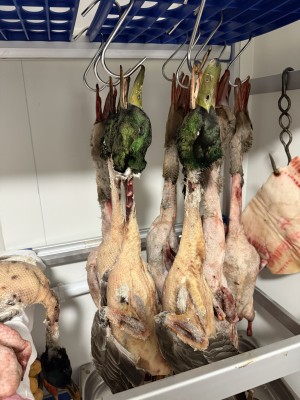
After a few weeks of running the garde manger, I was moved to the hot line working fish garnish. Chef Pascal said he wanted me to be “more a part of the kitchen.” I was pleased to hear that my position in the brigade was on his mind and excited to get a closer look at how service was run. As I moved to my new post, I came to the realization that we weren’t just cooking a la minute, but that the menu itself was a la minute. For both lunch and dinner services Chef Pascal would call the tickets from the top of the pass. Depending on which of the four available menus for that day was ordered, the chef de cuisson on the meat side and the poissonier would call out the menu for the given table. Their selections were based on notes that Christophe, the part owner running the dining room, would give to the cooks earlier in the prep day as well as the seven or eight types of meat, and three or four types of seafood that we would have in house. There were days when no two tables would be eating the same menu. As such, we had totally diverged from the hyperconsistent and sometimes robotic style of service that can result from the degustation format. Instead our aim was excellence through cooking ingredients cooked “a la minute” for that guest. If a richer meat course like sweetbreads was featured at the end of the savories, a lighter fish course such as a steamed bass would be selected to precede it so as to not overwhelm the diner. My stationmate Arthur and I would then prepare sides of various styles and richness in order to match the proteins. This sense of timing and preserving the vitality of each product was the brigade’s collective grail quest. Chef’s uncompromising eye dictated our tempo. One busy dinner service, Chef’s voice cut through the focused push of the service. He declared that the pigeon was raw. Silently, the chef de cuisson reglazed the pigeon and placed the delicate breasts in the molteni oven. After a mere 30-40 seconds, the meat was sent back to the pass. The cuisson, carefully cultivated with over thirty minutes of gentle basting and rolling over the coals remained visibly identical to before, but Chef gave it a nod. As the bird was carved, everyone looked at each other with flitting glances. There were things happening that were clear to Chef and imperceptible to the rest of us, but two things were abundantly clear: first was that we were all now on the edge of “a la minute cooking”, and second was that we all had a lot to learn.
The same old-school mantras that echo throughout most kitchens would come to define my time in Paris: waste-nothing, cook with the seasons, work for the joy of the guest. The power of these fundamental pillars was not in their novelty, but in the commitment, fervor, and intention with which they were carried out. Once, the pastry chef de partie rifled through my trash pulling out what must have been a gram or two of citrus scraps. He held them out to me, demanding in broken English what I had been thinking. All I saw was a couple nubs, stems, and pith that I perfunctorily discarded in the rush of slicing garnish a la minute. For the following two weeks he didn’t allow me to take a single piece of his citrus, spanning from fresh pomelo, bergamot, mandarins, mexican limes, and finger limes from the south of France. Instead he delivered me scraps from the other stations and made a ritual of pilfering my trash bain at odd intervals of the day. A few weeks later while working a new station, I asked the same cook for more of a citrus marmalade. He walked me down to the freezer to proudly reveal a tupperware box filled with over ten kilos of the same citrus scrap that I had discarded a few weeks prior. He had been squirreling away each precious sliver of citrus skin for a month across all the different stations and freezing it, so that he could grind and cook the amalgamation for four days. The result was the most flavorful and complex citrus condiment I had ever tasted. It helped me realize that the privilege, but also the responsibility, of working with the best farmers and their produce is to push yourself religiously, fanatically, to use everything as it could be flavorful to the very last drop.
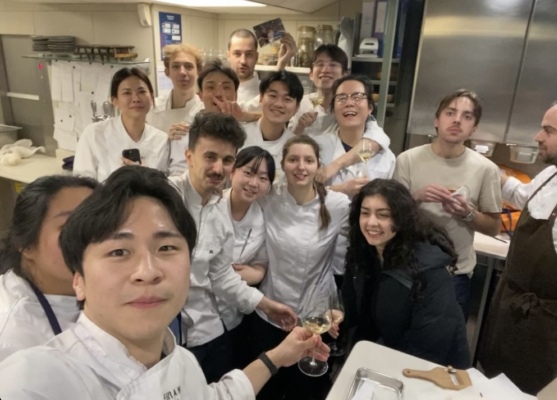
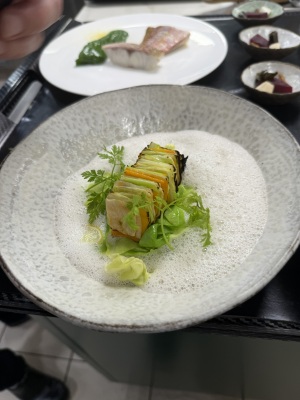
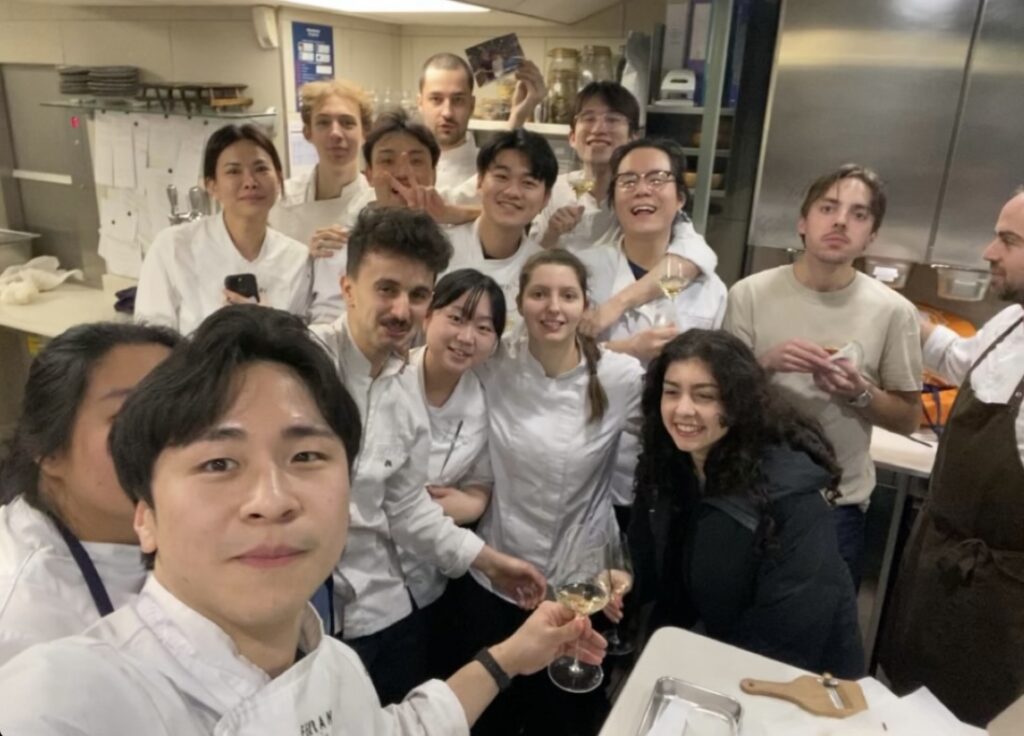
The most impressive aspect of the restaurant was not simply its practices and its team, but the manner and attitude with which our daily tasks were carried out. The story and ethos behind this citrus marmalade, or the “menu unique”, or the staunch commitment to true “a la minute” cooking have never been openly publicized by the restaurant. Instead they were tenets that were embodied through the quiet but intensely focused commitment of the team. This culture resulted in a brigade where interns, stages, and years-long veterans were given the opportunity to learn from each other in ways that felt intimate and real. We would provide each other with insights about our respective cultures during staff meal or the finer points of breaking fish, cleaning local products like whelk, and experimenting with different techniques (like a japanese mountain yam and black truffle millefeuille) Through this meaningful and deeply ingrained culture Chef Pascal and the team at Astrance required that I re-evaluate my own standards for tasks that I considered standardized and inspired me to seek increasingly difficult but more rewarding levels of execution. You can actually afford a moment to take a breath and turn to a product or a technique and ponder whether it can be done better or in a new way. In a culinary time that can sometimes feel saturated with narratives of place, approach, and memory my experience at Astrance emphasized the opposite – fundamentals. The lasting impression of the restaurant was that with the right chef and the right team, an entire restaurant can be built around not a persona or a story, but an ethos around pure cooking – plate after plate, night after night. That ethos and the level of expectation made each cook believe in their own potential for growth. This was why we were all there.