

Since I began my professional culinary journey, I have always wanted to put my Latino and Puerto Rican roots in the forefront. As a young chef, I often felt that Latin and Caribbean cultures were underrepresented within the culinary mainstream. My time at Llama Inn, a small Peruvian restaurant in Williamsburg, New York, and their take on Peruvian cuisine had a significant impact on my culinary journey. Peruvian cuisine is an amalgam of flavors from different cultures as a result of Spanish colonialism as well as Italian, Chinese and Japanese migration. In the past few years, Peruvian cuisine has been trending because of their diverse gastronomy, with various Peruvian restaurants sitting within the top 10 on the World’s 50 Best list. So what does Peruvian food have to do with Puerto Rican food? Similar to the development of Peruvian cuisine, Puerto Rican cuisine is a blend of different cultures, resulting from Spanish colonialism and the settlement of African slaves with the inclusion of what remained of the Taino people.
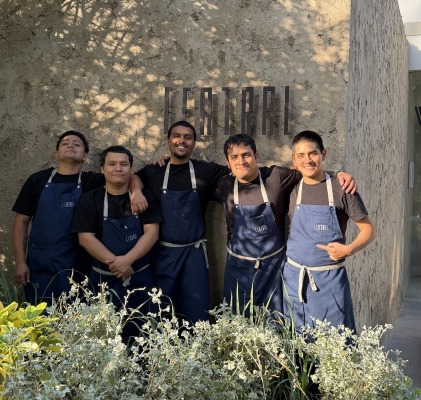
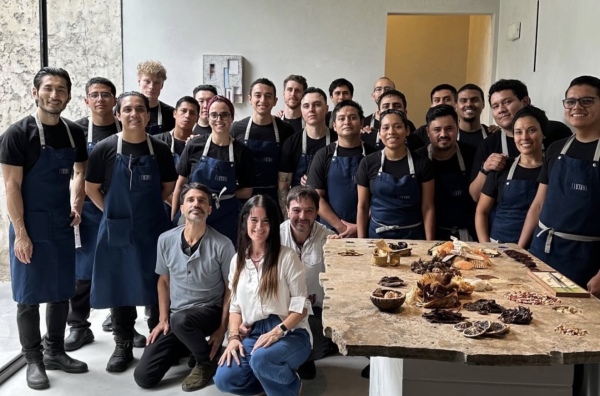
Central in Lima, Peru, sits on the best of the best list within the World’s 50 Best. Their cooking philosophy is what drew me to stage there. Central is comparable to a research lab where they study native products and see how they can transform something simple, such as a pumpkin, without anything going to waste. They push for creativity, passion, exploration and sustainability which are the qualities that have led them to become one of the best restaurants in the world.
During my eight-week stage I spent 14 days in every station of the kitchen, working closely with the Cold section, Hotline and Prep:
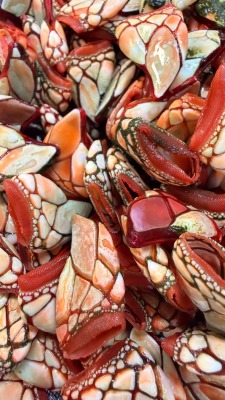
Cold Station: First day at Central began with their version of Garde manger also known as “Frios,” which means cold in Spanish. At this station I was able to work with ingredients I had never seen before, such as barnacles, clams dyed blue with spirulina, and different types of seaweed. I also got to forage in the garden for garnishes. The preparations of these ingredients were surprisingly simple. Barnacles were just peeled and washed, served raw sliced into rounds. The clams also were served raw, dyed blue and sliced thinly for garnish.
Hot line: This station was not very different from Frios in terms of simplicity, but very interesting in how they made components for a dish out of things we may consider trash or wouldn’t think to use. It was at this station that I saw the chefs’ curiosity in action. For the most part I assisted them with regular knife cuts and helped them process purées and sauces. There were a few dishes that stood out to me. The skinless octopus dish is simply poached and chopped, but the skin is peeled (which I found odd) and shallow fried until crisp to make a crumble for the dish. Another dish I prepped for was one that highlights corn served with a corn purée, crispy quinoa and a corn infusion made out of roasted corn husks and hairs. Here I realized how nothing goes to waste; every piece of produce on the menu gets used in its entirety.
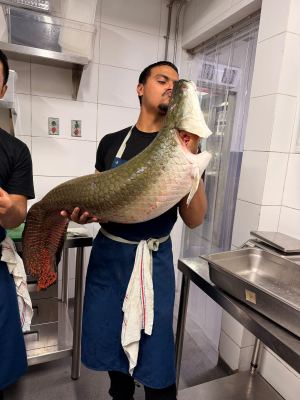
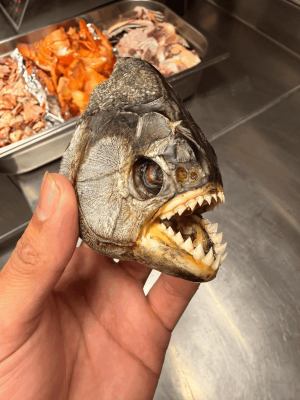
Prep: This was the final station on my stage, and the one I enjoyed the most. On this station I assisted with the cleaning of the seafood and putting away deliveries that came in the mornings. I was able to work with seafood and produce I never knew about while also processing familiar seafood, such as shrimp, lobsters, sea urchins and razor clams. The highlight of this station was watching Chef Percy break down a giant Amazonian river fish in 15 minutes. This fish, which is called “Paiche,” can grow up to 10-15 feet in length and weigh over 50 lbs. Some wild caught ones have been said to grow up to 300lbs. Lastly, another fish I worked with was the Amazonian piranha known as Pacu. This fish is heavily cured due to its muddy taste and grainy texture. It is chopped up finely and served in a lettuce heart.
I asked questions on top of questions and let my curiosity run free to learn as much as I could from everyone. While the food at Central does not always involve intricate preparations, the menu is very much driven by curiosity. There is a constant conversation about how else a product can be used, such as making chocolate out of trimmed fish fat. Central has taught me how to look further than just using the fillets of fish but ask what can be done with the off cuts like the organs, bones, eyes, cheeks, scales etc. This experience did more than just teach me technique; it also showed me the importance of education to dig deeper into my culinary interests. My time at Central taught me that the difference between good and great lies not only in how a dish looks or tastes, but in how the story and the chef’s vision behind it are conveyed to the guest.