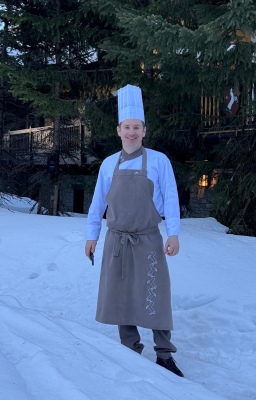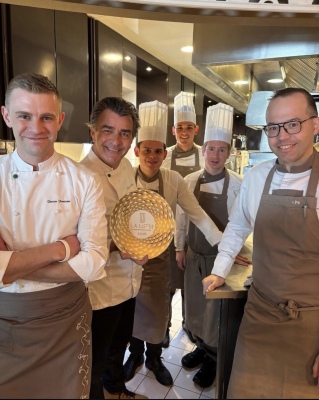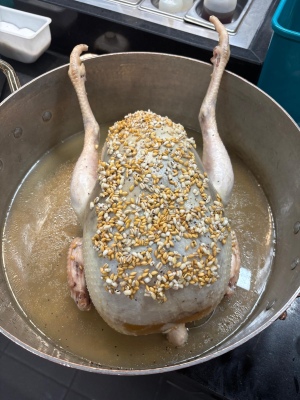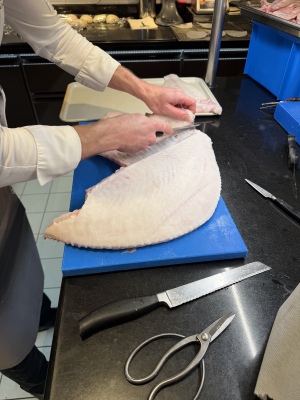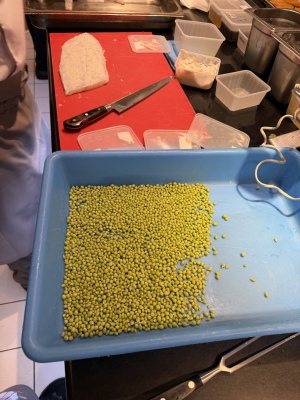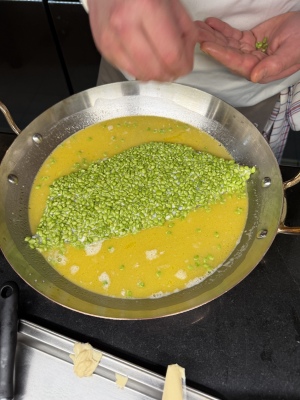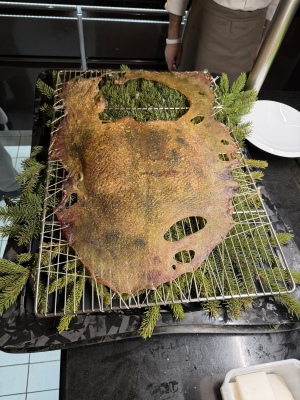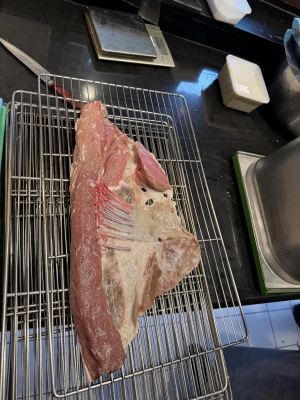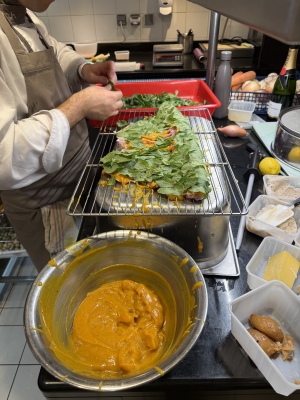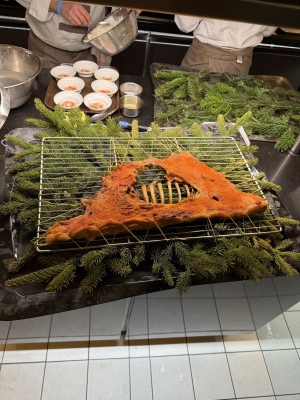


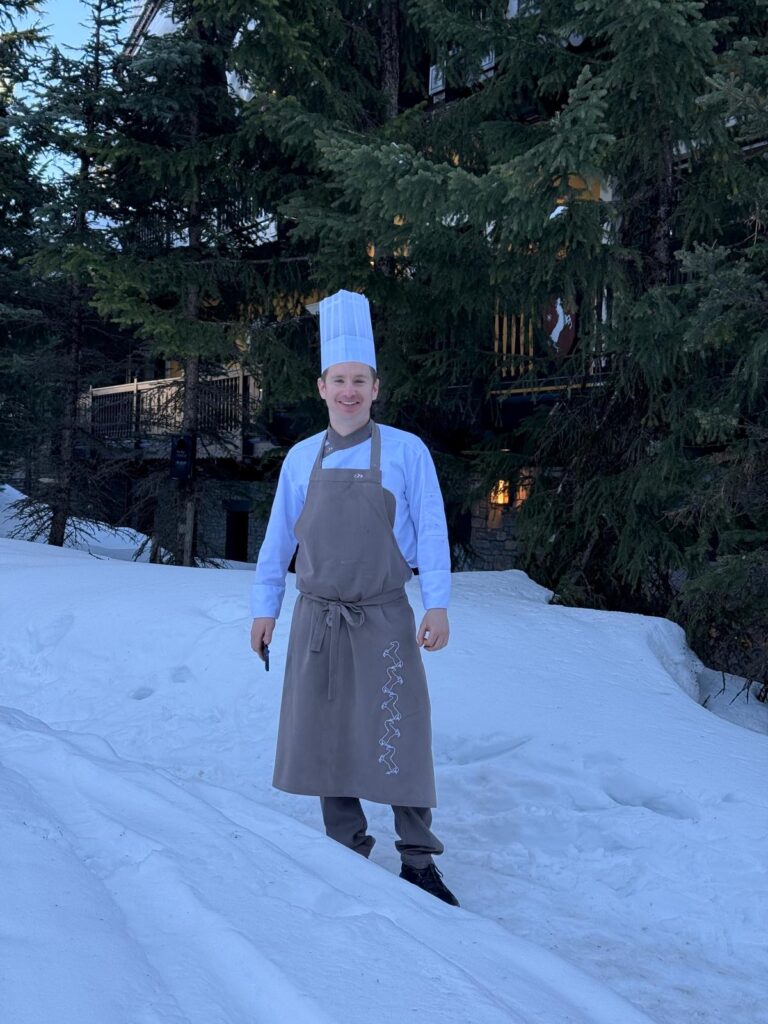
I was given the incredible opportunity, through the Ment'or Grant Program to stage at Le 1947 at Cheval Blanc Courchevel, under Chef Yannick Alléno and Chef Dorian Fontaine. I would like to first and foremost thank Chef Thomas Keller, who is deeply involved with the fantastic Ment’or organization. I'd also like to sincerely thank Chef Palagi, and Ment'or as a whole for making this experience possible and for allowing me to further my education as a cook at one of the most unique and respected restaurants in the world.
I selected Le 1947 because the restaurant represented the pinnacle of my ambitions since I first started my cooking journey. I began my career as a seasonal cook at a ski resort in Alta, Utah. At the time, my ambition was more singular: to find a job that would allow me to ski every day – my strongest passion at that time. The first restaurant I ever worked at at this resort was located halfway up a ski mountain, where employees had the choice to make a 30 minute hike up the mountain or take a ski lift to get to work. I spent my days cooking hamburgers and reheating chili for tens of thousands of skiers. Through this initial exposure to food and hospitality, I realized that I loved cooking just as much as skiing, if not more.
As my interest in hospitality grew, I began researching chefs and learning about fine dining. That is when I first learned about Chef Keller's early years working seasonal restaurant jobs in Rhode Island, New York, and Florida. Hearing his story inspired me because it showed me that it was possible to begin in humble resort kitchens and transition to working in some of the best kitchens in the world. During this research period, I learned that the French Alps had renowned three Michelin star restaurants located directly on ski mountains, blending my two passions in a way that seemed like a dream. From that point forward I was determined to cook for Chef Keller, and eventually to travel to France and cook at a three Michelin star restaurant on a mountain.
This winter, my dream was actualized when I was selected for the Ment'or Grant and into the exclusive fold of Le 1947 located high above in the French Alps. Arriving at Cheval Blanc Courchevel for the first time felt both surreal and somehow nostalgic. Once again, I found myself hiking up a ski mountain to get to work, but this time I was walking into one of the most celebrated restaurants in the world, keen on learning exquisite techniques: a long way from burgers and chili. Plus, Le 1947 is truly unique because guests can ski directly into the restaurant, pairing fine dining with fine skiing.
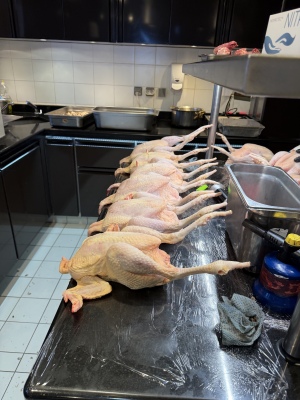
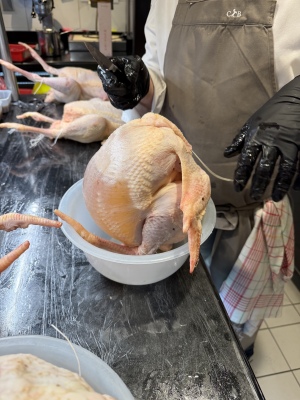
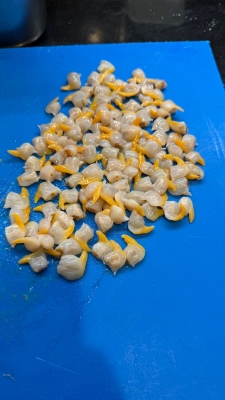
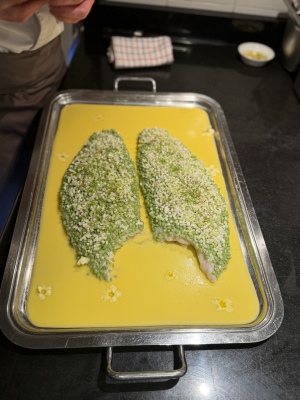
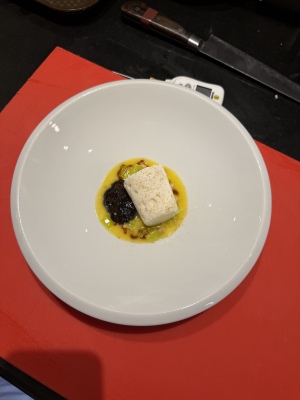
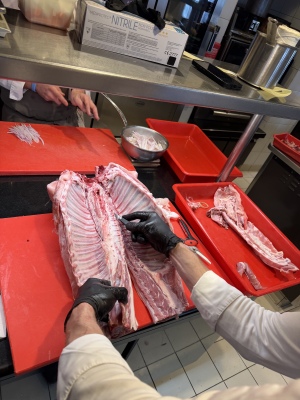
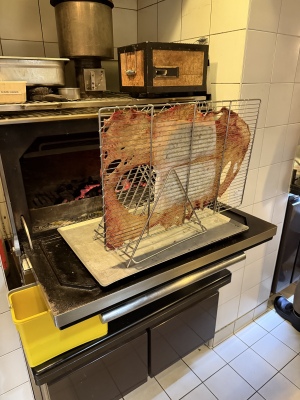
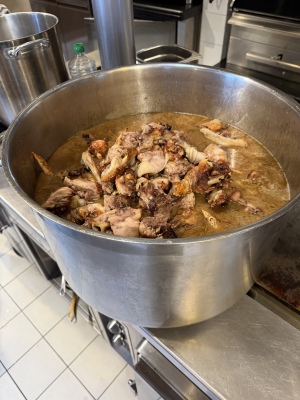
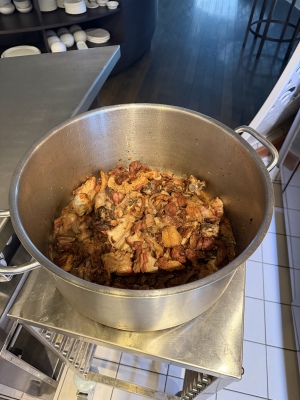
During my internship, my primary role was to help team prepare and execute service at a three Michelin star level. Most days I worked with the entremetier team, due to the large amount of mise en place required for service. Since I worked both morning prep and evening dinner service, I was able to observe the full rhythm of the kitchen throughout the day. In the mornings, I watched Chef Fontaine and the team prepare jus and carefully break down ducks, lamb, chicken, and fish with incredible precision. At night, I participated in dinner service and assisted with plating dishes, including the restaurant's signature dish "Ballade," which contains nearly fifty individual components.
Although I have been cooking professionally for nearly ten years, this experience was extremely humbling. I entered Le 1947 as the only stagiaire for the season and as such, returned to the bottom of the kitchen hierarchy. Because employee housing on the mountain is extremely limited, there was minimal room for additional staff outside of the space that was reserved for me. I was at the bottom, yet 1 of 1 in my role, something which made the opportunity even more meaningful. The experience reminded me how important it is to be grateful for the moment and remain a student throughout your career.
Perhaps the most valuable thing I learned during my stage was Chef Alléno's philosophy on flavor development and sauces. His approach focuses heavily on extraction techniques and the idea that sauces are the foundation of a dish and the main carrier of flavor. I learned about cryo-clarification and concentration methods, chlorophyll techniques for green purées, and how modern scientific approaches can be combined with classical French techniques to create deeper and cleaner flavors. One of my favorite tasks each day was preparing Chef Alléno's aligot potatoes. While aligot is a classic French dish, Chef Alléno elevated it through his own techniques by incorporating fermented pine needles harvested from trees surrounding the hotel and by using Beaufort cheese extraction methods that created a depth of flavor unlike anything I had tasted before.
Another major takeaway from this experience was seeing how Chef Alléno and his team were able to source and execute world-class cuisine in such a remote alpine environment. It reinforced my belief that there is no reason why America and its many ski resorts and remote mountain destinations cannot develop the same level of alpine dining culture. Just as Chef Keller helped redefine American fine dining through The French Laundry and Per Se, this experience further inspired me to someday help bring a similar level of refined mountain cuisine and hospitality to ski resorts in the United States. Eventually, I even hope to open a hotel and restaurant of my own inspired by places like Le 1947 and Cheval Blanc Courchevel.
Another highlight of the experience was living with the other cooks on the mountain. Because we all lived together, we became close very quickly. The team welcomed me warmly, introduced me to the local mountain culture and cuisine, helped me to learn French, and shared their own experiences working throughout France. I was amazed by the passion, discipline, and ingredient knowledge of the cooks and by how deeply culinary culture is integrated into everyday life in France, even in a small mountain town.
This internship also gave me a new appreciation for the different ways restaurants can operate at the highest level. Le 1947 serves just around twenty guests per evening with a brigade of approximately ten chefs, where every detail is focused entirely on precision and perfection. At the same time, the experience made me appreciate even more the scale and consistency required at Per Se, where we serve significantly more guests each night while still maintaining three Michelin star standards. Experiencing two completely different styles of operating at the highest level was invaluable to my growth as a cook. Where there is a will, there is a way.
This grant opportunity helped me grow tremendously both personally and professionally. It expanded my technical knowledge, exposed me to new approaches to flavor and hospitality, strengthened my confidence working in elite kitchens, and reaffirmed many of the goals I set for myself when I first started cooking in Utah years ago. Most importantly, it reminded me why I fell in love with cooking in the first place and further motivated me to continue pursuing excellence throughout my career. I am deeply grateful for this opportunity and for the trust that Chef Keller, Chef Palagi, the Ment'or organization, Chef Alléno, Chef Fontaine, and both the Per Se and Le 1947 teams placed in me. The lessons I learned during these three months will stay with me throughout my career, and I hope to continue applying those lessons as I grow as a chef and work toward contributing to the future of mountain dining and hospitality in America.